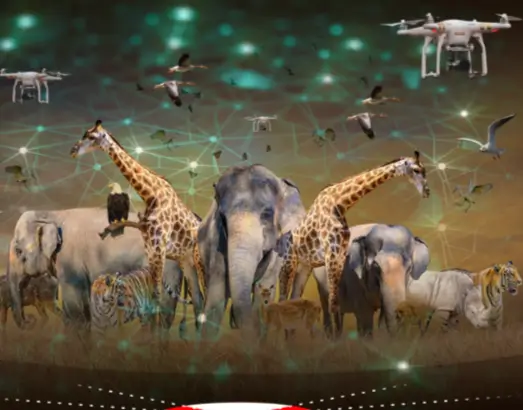

Machine learning quantifies poaching risk, tracks habitat fragmentation, and informs adaptive management under uncertainty. It links sensor data, camera streams, and ecological theory through transparent pipelines and provenance records. Models support population estimates, habitat use, and intervention targeting with measurable uncertainty. Ethical frameworks and governance structures ensure responsible data use and accountability. The approach is rigorous and interdisciplinary, balancing statistical rigor with ecological insight, and invites careful consideration of implementation challenges and sustainability.
What Machine Learning Can Do for Wildlife Conservation
Machine learning offers a suite of tools that can systematically enhance wildlife conservation by transforming how data are collected, processed, and interpreted. These methods quantify poaching risk and monitor habitat fragmentation, enabling objective assessments, targeted interventions, and adaptive management. The approach integrates ecological theory with statistical rigor, supporting transparent decision-making while honoring complexity, uncertainty, and the imperative for shared, rights-respecting conservation outcomes.
From Data to Decisions: Building Effective ML Pipelines
To move from outputs of prediction and monitoring to actionable governance, the construction of robust ML pipelines integrates data ingestion, preprocessing, modeling, evaluation, and deployment within a transparent, repeatable framework.
This disciplined workflow emphasizes data governance, documenting provenance, quality controls, and versioning.
Stakeholder engagement ensures alignment with objectives, ethics, and conservation policies, enabling rigorous, interdisciplinary decision-making that balances curiosity with responsibility.
See also: How Governments Are Approaching Artificial Intelligence Regulation
Real-World Use Cases: Detecting Poaching, Monitoring Populations, and More
Real-world deployments of machine learning in wildlife conservation illustrate how data-driven methods translate sensor streams, camera traps, and field observations into timely insights for protection and management.
Applications include poaching detection, population estimation, and habitat use modeling. Results hinge on data privacy safeguards and long-term funding sustainability, ensuring transparent, reproducible analytics, scalable monitoring, and cross-disciplinary collaboration that respects local contexts and stakeholder needs.
Ethics, Collaboration, and Practical Considerations for Success
The integration of ethical frameworks, collaboration across disciplines, and practical implementation considerations shapes the reliability and impact of ML-driven wildlife conservation. This analysis emphasizes ethics and governance as foundational safeguards, alongside transparent data practices and accountability. It compares collaboration models, highlighting stakeholder engagement, open data, and iterative evaluation to ensure robust, adaptable systems that respect ecological limits, rights, and local autonomy.
Frequently Asked Questions
How Do ML Models Handle Data Gaps in Remote Habitats?
Despite data gaps in remote habitats, ML models leverage imputation, transfer learning, and uncertainty estimates to mitigate model bias; rigorous evaluation remains essential, balancing data gaps with ecological relevance, reproducibility, and interdisciplinary collaboration for robust, transparent wildlife insights.
What Are the Costs and Funding Models for ML Projects?
Costs and funding vary: initial development, model deployment, and ongoing maintenance; grants, partnerships, open-source contributions, licensing, and in-kind support compose a diversified funding model; sustainable financing balances transparency, measurable impact, and interdisciplinary collaboration for long-term viability.
How Is Model Bias Evaluated in Wildlife Data?
Bias assessment and model fairness are evaluated through cross-domain metrics, stratified performance analyses, and bias-variance studies on wildlife datasets, incorporating domain experts. The process emphasizes transparency, reproducibility, and continuous monitoring to align with interdisciplinary, data-driven standards.
Can Local Communities Benefit From Ml-Enabled Conservation?
Local communities can benefit from ml-enabled conservation through local governance and community led monitoring, enabling participatory data collection, transparent decision-making, and improvements in habitat protection while preserving autonomy and fostering trust, ethics, and interdisciplinary, data-driven program accountability.
What Are Deployment Challenges in Bandwidth-Limited Areas?
Deployment challenges arise in bandwidth limitations, affecting real-time analytics and model updates. In bandwidth-limited areas, data compression, edge processing, and asynchronous synchronization are essential to maintain robust ML-driven conservation workflows across dispersed ecosystems.
Conclusion
Machine learning stands as a rigorous, interdisciplinary engine driving conservation forward, translating noisy streams into actionable insight. By quantifying poaching risk, tracking habitat fragmentation, and forecasting ecological responses, ML informs targeted interventions and adaptive management under uncertainty. The strength lies in transparent pipelines, provenance, and ethical collaboration, ensuring policy relevance and reproducibility. In essence, ML illuminates the path from data to decisions, and like a compass, guides conservation toward resilient, rights-respecting futures.